
Press play to listen to this blog.
Energy storage creates flexibility within renewable systems. When storage is actively managed, it delivers measurable cost and carbon reductions.
Our case studies examine hydrogen generation and green methanol systems under variable electricity markets. (The analysis draws from the chapter “Energy Storage Management” in Industrial Decarbonization and the Energy Transition: Innovative Solutions for a Carbon-Free, Sustainable, and Clean Environment).
Optimized storage management reduces hydrogen production costs by shifting output to lower-price electricity periods.
For a 100 MWh electrolyzer operating under the Dutch electricity market, two operational strategies were compared:
Under unmanaged operation, total cost was 489,620 €/day. With optimal management, the cost decreased to 439,860 €/day, a reduction of roughly 10%, or approximately 50,000 €/day (18.0 MM€/year).
The difference lies in strategic timing. Rather than producing hydrogen continuously to match demand, the optimized system increases production when electricity prices are low and draws from storage when prices are high.
The result is not simply operational flexibility. It is measurable cost reduction.
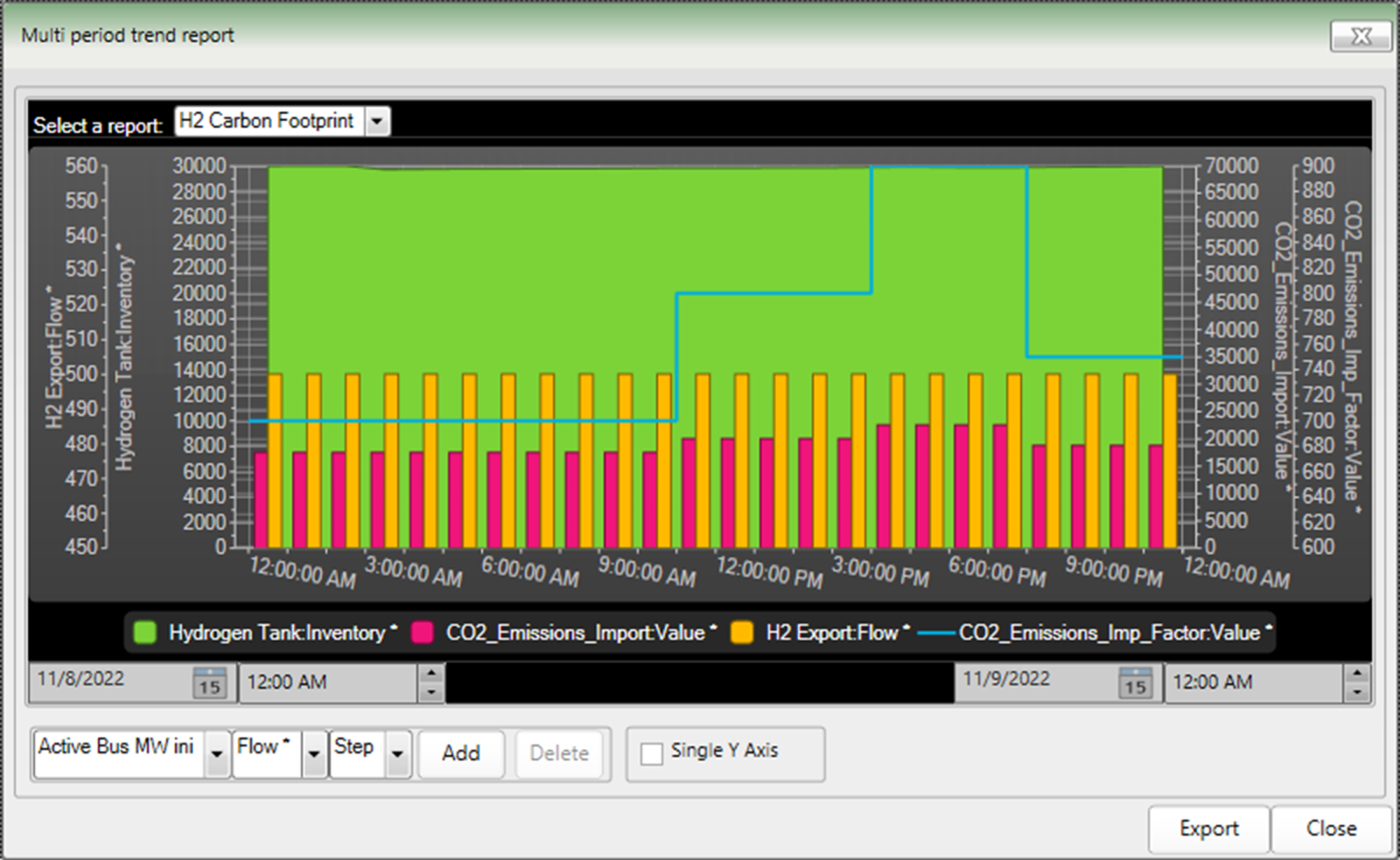
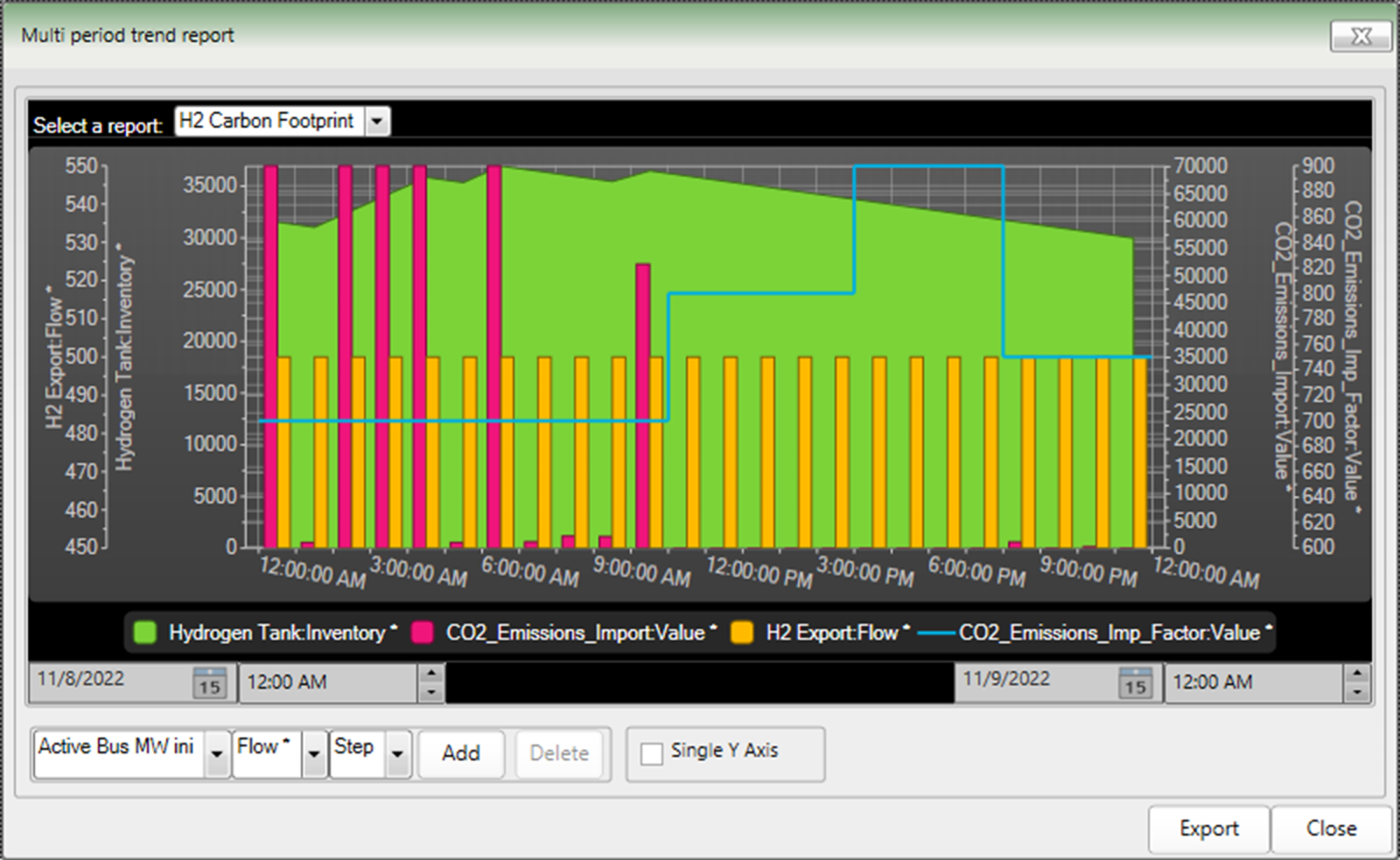
Yes. Optimized storage management can reduce carbon footprint by aligning generation with lower-carbon electricity periods.
In a green hydrogen system incorporating desalination and grid electricity, unmanaged operation resulted in a carbon footprint of 458.5 klb CO₂/day (207.9 tons/day). On the other hand, with optimal management, emissions were reduced to 411.8 klb/day (186.8 tons/day), representing a 10% reduction.
This reduction occurred without compromising hydrogen export rates or increasing operating costs (assuming constant electricity prices).
The mechanism mirrors the economic optimization case. Hydrogen production is increased when grid carbon intensity is lower and reduced when carbon intensity rises, with storage absorbing the difference.
The outcome: lower emissions with maintained production targets.
Storage size directly influences economic opportunity capture.
In a green methanol plant case, two hydrogen storage capacities were compared: 1.1 tons and 1.5 tons. With the smaller tank, operating costs were 6% higher. When storage reached full capacity, the system could not exploit low electricity prices by producing additional hydrogen.
Insufficient storage constrained flexibility and limited economic benefit.
Energy storage enables reliable and economically viable renewable systems but only when properly sized and actively managed.
Across these case studies, optimized storage management reduced operating costs by 10%, reduced carbon footprint by 10%, and demonstrated measurable economic impact in industrial hydrogen and methanol systems.
These results highlight a simple principle: storage delivers value when it is both correctly sized and actively managed.
Source
Ruiz, J., Montagna, P., and Wicmandy, M. (2025). “Energy Storage Management.” In Industrial Decarbonization and the Energy Transition: Innovative Solutions for a Carbon-Free, Sustainable, and Clean Environment. Elsevier.