
Press play to listen to this blog.
A Spanish-language version of this blog is available for Latin American audiences.
The new emissions regulation in Argentina’s Neuquén province signals a turning point for upstream operators.
In April 2026, the province introduced mandatory greenhouse gas (GHG) reporting requirements for the upstream oil and gas sector. The regulation establishes a standardized framework defining how operators must quantify, report, and verify emissions, addressing long-standing inconsistencies in methodologies across the industry.
The implementation will be progressive through to 2030, giving operators time to build capability while steadily increasing expectations. Central to this is a five-tier reporting system, where requirements become more stringent as production volumes increase.
Larger-scale companies must transition toward precise methodologies, including direct measurement, asset-level emissions tracking, and even validation by remote sensing technologies, significantly raising expectations for accuracy and transparency.
Importantly, the regulation also mandates third-party verification, making auditable, traceable data a core requirement for compliance.
Emissions reporting is no longer just a regulatory obligation, it is a strategic necessity for upstream operators.
Oil and gas production is one of the largest industrial sources of greenhouse gas emissions. As scrutiny from regulators, investors, and stakeholders increases, operators must demonstrate credible, transparent emissions data.
Robust upstream emissions reporting enables companies to:
Accurate GHG reporting underpins both operational efficiency and long-term competitiveness.
To comply with modern regulations like Neuquén’s, upstream operators need to move beyond manual or fragmented systems.
Key capabilities include:
Without these, maintaining compliance, and confidence in reported data, becomes increasingly difficult.
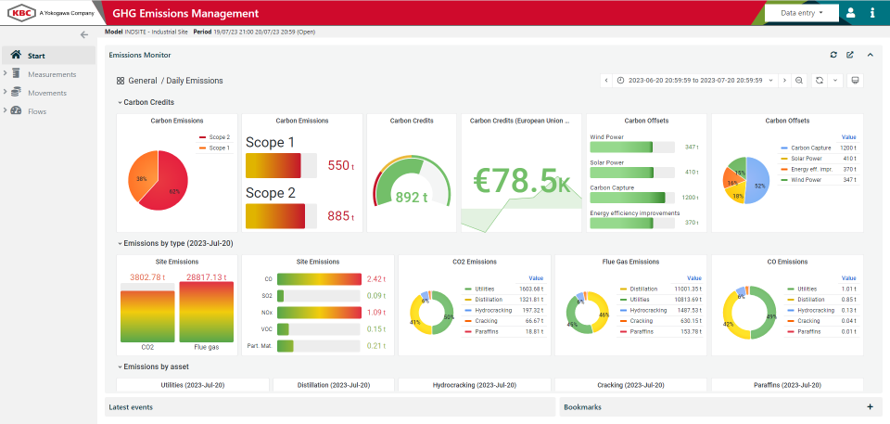
Digital solutions are becoming essential to meet upstream emissions reporting requirements. Visual MESA® Greenhouse Gas Emissions Management (VM-GEM) platform is designed to address exactly these challenges.
VM-GEM provides a unified, ISO-aligned and TÜV Rheinland certified platform for monitoring, calculating, and reporting emissions across Scope 1, 2, and 3. It enables real-time emissions tracking, helping operators quickly identify inefficiencies and take corrective action.
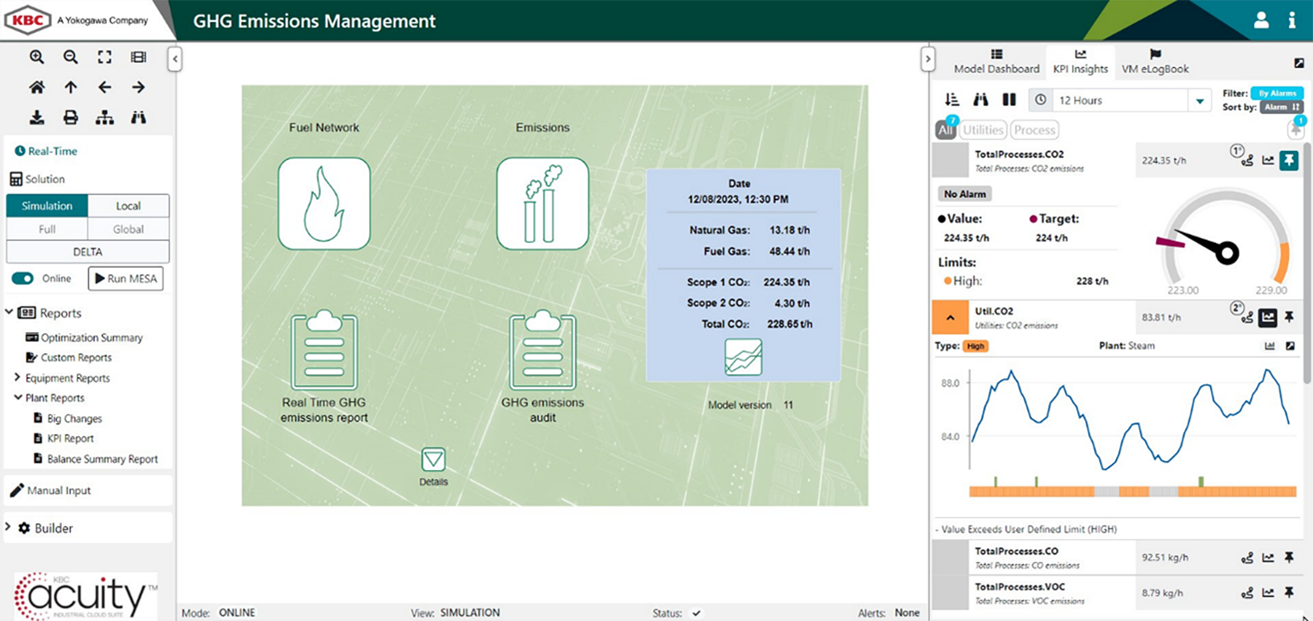
Crucially, the platform ensures full data traceability and auditability, supporting third-party verification and regulatory compliance. Automated workflows and flexible dashboards allow operators to generate consistent, transparent reports aligned with evolving standards.
As regulations like Neuquén’s set new benchmarks, upstream operators that invest in robust emissions management capabilities will be better positioned to comply, optimize performance, and compete in a carbon-constrained energy landscape.