Profit Improvement Program

Achieve more from your existing assets with a proven, implementation-focused and sustainable Profit Improvement Program®.

Winner Energy Project of the Year - Downstream Gulf Energy Excellence Awards 2025
Bulk and Commodity Chemicals

Identify, Capture and Sustain Hidden Value

Refiners today are under pressure to do more with less. Iimprove margins, reduce carbon intensity, reduce crude costs and optimize reliability, all without major capital investment. Hidden inefficiencies in process yields, energy consumption, reliability, and crude selection can quietly erode millions in value every year. KBC’s Profit Improvement Program (PIP) addresses this directly. Through a structured methodology, a PIP identifies, quantifies, implements, and sustains high-value opportunities that enhance margins, strengthen operational resilience and embed a culture of continuous improvement. Supported by technology, AI/ML use cases and building human capability, a PIP ensures that improvements are not only implemented but sustained long term.

Download the brochure

Improve margins

Capture up to $1 per barrel of crude through no- and low-capex optimization.

Strong ROI

Non-investment quick win opportunities deliver immediate ROI with profits between 5-10 times the program costs.

Improve reliability

Drive asset utilization through defect elimination and optimized turnarounds, delivering a 2-5% improvement in mechanical availability.

Enhanced operational efficiency

Generate yield improvements of 40–80 c/bbl of crude through molecular and supply chain feed management.

Reduce energy costs

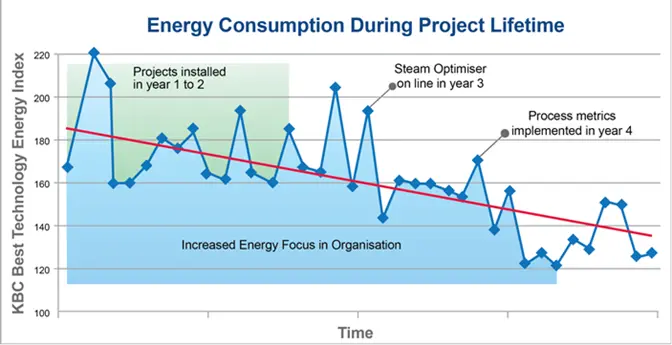
Energy use is a quick win that’s easy to measure reducing costs between 5–8%.

Expertise you can trust

With more than 400 PIPs delivered worldwide, you benefit from solutions shaped by global experts with real operational experience and industry-leading technology. 

How a PIP Delivers Value Across Your Operations

KBC’s Profit Improvement Program® brings together a multi-discipline team of industry experts, high-fidelity digital technology, and a proven, rigorous methodology to optimize site-wide, and multi-site operations. For over 40 years, PIPs have delivered rapid, high-impact cash-flow-positive results from quick wins and minor investments. Following a structured and rigorous methodology, PIPs focus on improvement across the prioritized areas that drive the greatest impact on refinery performance.

Energy & Decarbonization
Process Improvement
Reliability, Availability & Maintenance
Supply Chain & Crude Selection
Human Performance

Energy performance is both a cost and a carbon challenge. PIPs improve furnace efficiency, heat integration, shaft-work efficiency, process energy consumption and steam/power optimization. Digital energy models and emissions tracking tools, such as Visual MESA®, continuously monitor performance and highlight emerging gaps. The result: lower energy intensity, reduced emissions, and increased alignment with corporate decarbonization goals without major capital expenditure.

Process performance directly influences margin capture. PIPs apply molecular management, constraint debottlenecking, giveaway reduction, catalyst management, refinery-wide flowsheet modeling and digital-twin process unit modeling to reveal and capture high-value opportunities. Real-time optimization (RTO) enhances yield and throughput using validated, plant-specific models that ensure improvements are fully implemented and sustained.

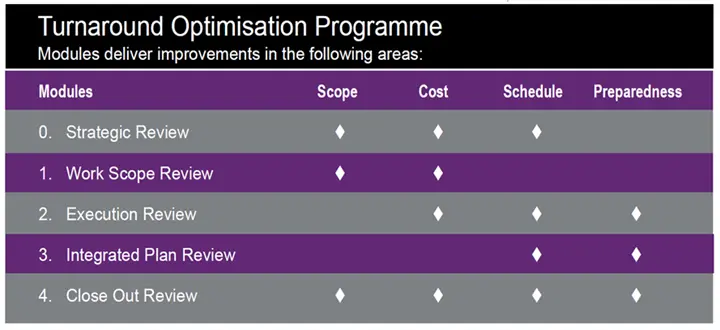
PIPs improve reliability by eliminating defects, tackling bad actors, tightening integrity operating windows, and deploying corrosion and fouling monitoring technologies to strengthen asset availability by 2-5%. Digital monitoring provides early warning of deviations, enabling proactive maintenance and reducing variability. Combined with improved turnaround planning (TR-0 to TR-4), and structured maintenance strategies refiners typically cut turnaround duration by up to 7 days and reduce asset maintenance costs by up to 20%, ensuring more stable, predictable throughput and sustained performance.

crude selection

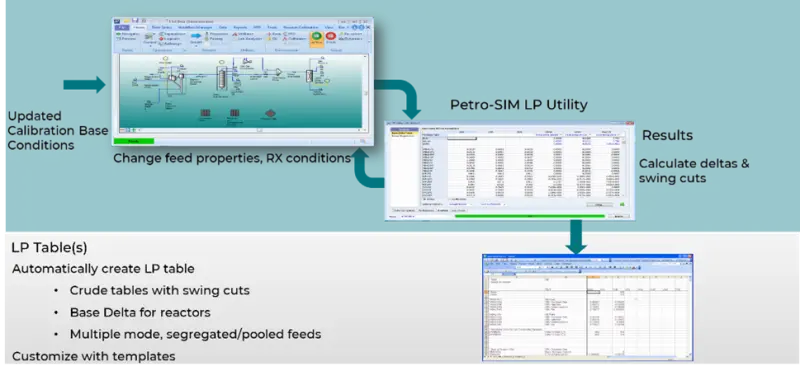
Crude accounts for up to 90% of refinery costs, making crude-slate decisions one of the biggest drivers of margin. PIPs align planning LP models with real-world operations, improve crude selection, and bridge gaps between scheduler, planner, and operations. Digital back-casting and opportunity identification tools reveal high-value feedstock strategies. With Petro-SIM® and integrated digital twins, refiners capture the optimal crude and execute it consistently.

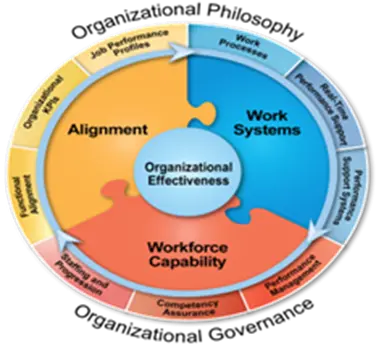
Sustainable improvement depends on people as much as technology. Utilizing our change management expertise, PIPs build capability through coaching, alignment of work processes and best practice operating procedures. Digital process and energy dashboards, Profit Tracker and real-time KPIs enhance situational awareness and decision-making. This ensures that as digital tools maintain the performance envelope, the workforce maintains the discipline to keep improvements locked in.

The Methodology Behind the PIP

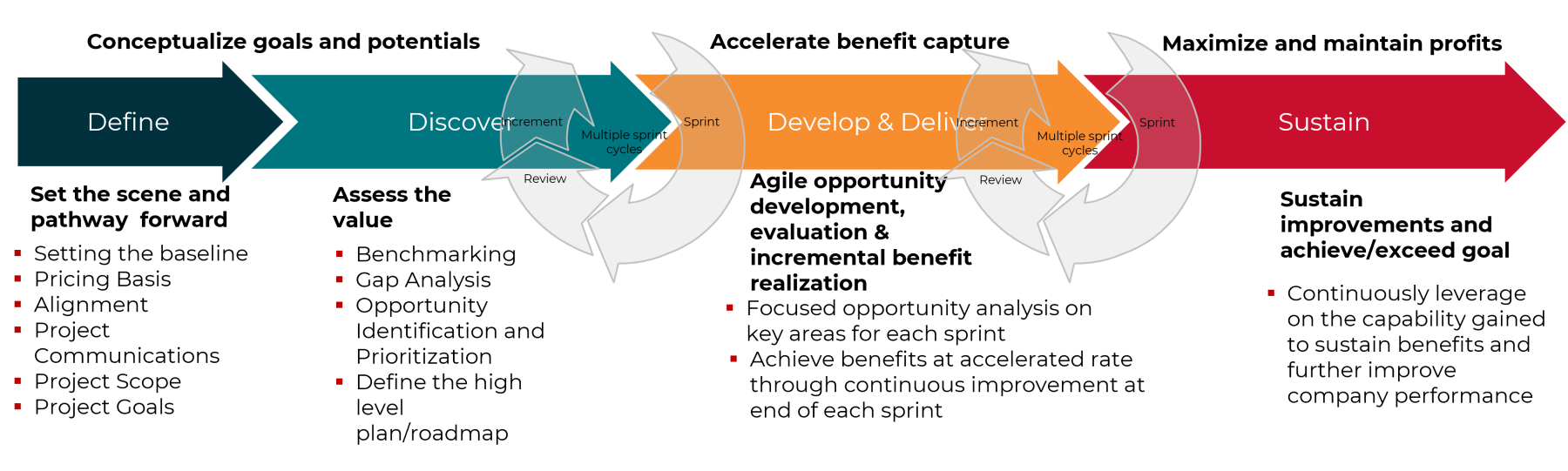
KBC’s 4DS methodology provides a structured, repeatable framework that ensures opportunities are identified, value is delivered quickly, and improvements are sustained long after the program ends. Each stage builds on the last to create a disciplined, digitally enabled pathway to lasting performance.

  • Define: Establish the baseline, align stakeholders, set scope and goals, and create clear communication pathways.
  • Discover: Benchmark performance, analyze gaps, identify and prioritize opportunities, and outline the high-level roadmap.
  • Develop & Deliver: Use expertise and technology to evaluate opportunities in detail, implement quick wins, and capture incremental benefits rapidly.
  • Sustain: Embed capability, deploy digital tools, and reinforce work processes to ensure improvements are maintained and the program continuously identifies, implements and sustains new opportunities.

How Profit Improvement Programs Boost Refinery Performance and Sustainability

Watch this Hydrocarbon Engineering interview with KBC’s Senior Vice President, Sanjay Bhargava, as he explores how refiners are responding to tighter margins, rising energy costs, and decarbonization pressures. In this discussion, Sanjay explains how structured Profit Improvement Programs help organizations recover lost margin, improve reliability, and sustain performance through integrated approaches spanning process optimization, energy efficiency, and digital technologies.

Watch the interview

engineers at chemical industry plant

Profit Improvement Program Delivers $280 MM of Benefits

KBC implemented a multi-year Profit Improvement Program to bring about a STEP change in operational performance with a focus on improving margins, reliability, and safety using KBC’s Best Practices. This was followed by a sustainment program supported by KBC’s Human Performance Improvement Offering and Technology. The results included implemented benefits of > 200 MM$/yr and cumulative benefits of ~ 280 MM$.  The sustained benefits were achieved via an organizationally aligned, trained capable workforce with a full technology tool-set and detailed multi-level 15 Work Processes and >2000 vetted Operating Procedures.

Sanjay Bhargava  - Profile Picture

Sanjay Bhargava

Senior Vice President - Global Process Optimization Solutions

Meet our expert in profit improvement

"Maximizing profitability will require maximizing asset utilization, molecular management, constraint management, cost containment, and safe/reliable operation. The margins will continue to be volatile and the survival of the refiners will depend on making it through periods of low margins. There will be fewer refineries in the world but the remaining few will reap the benefits from their investments with high operating margins. Profit Improvement Programs (internally and externally) will be the need for the future.  Converting these programs into a continuous improvement program will be the key to surviving in the future."

More on this expert